2016年1月8日 星期五

2016年1月7日 星期四
2016/01/07
week seventeen
William Caxton (c. 1422 – c. 1491) was an English merchant, diplomat, writer, and printer. He is thought to be the first English person to work as a printer and the first to introduce a printing press into England, which he did in 1476. He was also the first English retailer of printed books; his London contemporaries in the trade were all Flemish, German, or French. In 2002, he was named among the 100 Greatest Britons in a BBC poll.

An ethnic group or ethnicity is a category of people who identify with each other based on common ancestral, social, cultural or national experience.Unlike most other social groups, ethnicity is primarily an inherited status. Membership of an ethnic group tends to be defined by a shared cultural heritage, ancestry, origin myth, history, homeland, language and/or dialect, symbolic systems such as religion, mythology and ritual, cuisine, dressing style, art, and physical appearance.
Ethnic groups, derived from the same historical founder population, often continue to speak related languages and share a similar gene pool. By way of language shift, acculturation, adoption and religious conversion, it is possible for some individuals or groups to leave one ethnic group and become part of another (except for ethnic groups emphasizing racial purity as a key membership criterion).


Harriet Tubman (born Araminta Ross c. 1822 – March 10, 1913) was an African-American abolitionist, humanitarian, and, during the American Civil War, a Union spy. Born into slavery, Tubman escaped and subsequently made some thirteen missions to rescue approximately seventy enslaved family and friends, using the network of antislavery activists and safe houses known as the Underground Railroad. She later helped abolitionist John Brown recruit men for his raid on Harpers Ferry, and in the post-war era was an active participant in the struggle for women's suffrage.

Checkmate (often shortened to mate) is a game position in chess (and in other board games of the chaturanga family) in which a player's king is in check (threatened with capture) and there is no way to remove the threat. Checkmating the opponent wins the game.
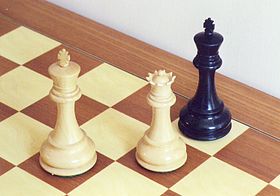
A statesman is usually a politician, diplomat or other notable public figure who has had a long and respected career at the national or international level.
-------------------------------------------------------------------------------------------------------------------------
vocabulary
- tude - 偏頗 e.g. platitude
- 移動棋子 move the chess
- al - suffix noun e.g. approval
- reach the goal(target;limit;agreement;audience;answer........)
unit 29
- adroit - skilful and clever, especially in dealing with peoplesynonym skilful
- constituent -
- contention - [uncountable] angry disagreement between peoplesynonym dispute
- [countable] contention (that…) a belief or an opinion that you express, especially in an argument
- irreparable - (of a loss, injury, etc.) too bad or too serious to repair or put right
- pinnacle -
- [usually singular] pinnacle of something the most important or successful part of somethingthe pinnacle of her careerHe spent more than twenty years at the pinnacle of his profession.
- a small pointed stone decoration built on the roof of a buildingWe could just make out the pinnacles of the cathedral in the distance.
- a high pointed piece of rock, especially at the top of a mountain
- platitude - a comment or statement that has been made very often before and is therefore not interesting
- promiscuous -
- having many sexual partnerspromiscuous behaviora promiscuous lifestyle
- (formal) taken from a wide range of sources, especially without careful thought
- repudiate -
- repudiate something to refuse to accept somethingsynonym rejectto repudiate a suggestionSocialism had been repudiated at the polls.
- repudiate something to say officially and/or publicly that something is not truesynonym denyto repudiate a report
- repudiate somebody (old-fashioned) to refuse to be connected with somebody any longersynonym disownHe repudiated his first wife and married her sister.
- spontaneous -
- not planned but done because you suddenly want to do ita spontaneous offer of helpThe audience burst into spontaneous applause.
- often doing things without planning to, because you suddenly want to do them
- (specialist) happening naturally, without being made to happenspontaneous remission of the disease
- done naturally, without being forced or practiseda tape recording of spontaneous speech
- stigma -
- [uncountable, countable, usually singular] feelings of disapproval that people have about particular illnesses or ways of behavingthe social stigma of alcoholismThere is no longer any stigma attached to being divorced.
- [countable] (biology) the part in the middle of a flower where pollen is received
- abrasive -
- an abrasive substance is rough and can be used to clean a surface or to make it smoothabrasive kitchen cleanersRub down with fine abrasive paper.
- (of a person or their manner) rude and unkind; acting in a way that may hurt other people’s feelings
- admonish -
- admonish somebody (for something/for doing something) | + speech to tell somebody firmly that you do not approve of something that they have donesynonym reproveShe was admonished for chewing gum in class.
- admonish somebody (to do something) to strongly advise somebody to do somethingA warning voice admonished him not to let this happen.
- antithesis -
- the opposite of somethingLove is the antithesis of selfishness.Students finishing their education at 16 is the very antithesis of what society needs.The current establishment is the antithesis of democracy.
- a contrast between two thingsThere is an antithesis between the needs of the state and the needs of the people.
- culmination - the highest point or end of something, usually happening after a long time
- docile - quiet and easy to control
- emulate -
- emulate somebody/something (formal) to try to do something as well as somebody else because you admire themShe hopes to emulate her sister's sporting achievements.
- emulate something (computing) (of a computer program, etc.) to work in the same way as another computer, etc. and perform the same tasks
- hierarchy -
- [countable, uncountable] a system, especially in a society or an organization, in which people are organized into different levels of importance from highest to lowestthe social/political hierarchyShe's quite high up in the management hierarchy.
- [countable + singular or plural verb] the group of people in control of a large organization or institution
- [countable] (formal) a system that ideas or beliefs can be arranged intoa hierarchy of needs
- incapacitate - [usually passive] incapacitate somebody/something (formal) to make somebody/something unable to live or work normally
- prognosis -
- (medical) an opinion, based on medical experience, of the likely development of a disease or an illnessto make a prognosisThe prognosis is not good.
- (formal) a judgement about how something is likely to develop in the futuresynonym forecast
- tumult -
- a confused situation in which there is usually a lot of noise and excitement, often involving large numbers of peoplethe tumult of warA tumult of shouting and screaming came from within the house.They waited for the tumult to die down.Soon all was in tumult.
- a state in which your thoughts or feelings are confuseda troubled mind in tumult
訂閱:
意見 (Atom)