Week ten
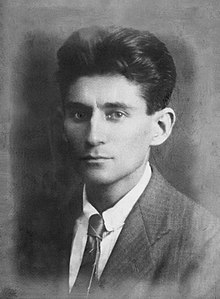
Kafka - Franz Kafka (3 July 1883 – 3 June 1924) was a German-language writer of novels and short stories, widely regarded as one of the major figures of 20th century literature. His work, which fused elements of realism and the fantastic, typically featured isolated protagonists faced by bizarre or surrealistic predicaments and incomprehensible social-bureaucratic powers, and has been interpreted as exploring themes of alienation, existential anxiety, guilt, and absurdity. His best known works include "Die Verwandlung" ("The Metamorphosis"), Der Process (The Trial), and Das Schloss (The Castle). The term Kafkaesque has entered the English language to describe situations like those in his writing.
The Hunchback of Notre-Dame(鐘樓怪人) - The Hunchback of Notre-Dame (French: Notre-Dame de Paris) is a French Romantic/Gothic novel by Victor Hugo published in 1831. The title refers to the Notre Dame Cathedral in Paris, on which the story is centered, and the true protagonist of the story Esméralda.English translator Frederic Shoberl named the novel "The Hunchback of Notre Dame" in 1833 because at the time, Gothic novels were more popular than Romance novels in England. The story is set in Paris, France in the Late Middle Ages, during the reign of Louis XI (1461–1483).

--------------------------------------------------------------------------------------------------------------------------
vocabulary
- mock - v. make fun of ;laugh at
- bull's eye - 正中靶心
- venerate - 崇拜(特指凡人)
- man - hand e.g.manual , manipulate
unit 15
- connoisseur - an expert on matters involving the judgement of beauty, quality or skill in art, food or music
- conspiracy - a secret plan by a group of people to do something harmful or illegal
- contrite - very sorry for something bad that you have done
- distraught - extremely upset and anxious so that you cannot think clearly
- germane (to something) - connected with something in an important or appropriate way
- lucid - clearly expressed; easy to understand
- plight - a difficult and sad situation
- superficially - not thoroughly; in a way that is only concerned with what is obvious
- symmetrical - having two halves, parts or sides that are the same in size and shape
- verbose - using or containing more words than are needed
unit 16
- adept - good at doing something that is quite difficult
- encompass - to include a large number or range of things
- entrepreneur - a person who makes money by starting or running businesses, especially when this involves taking financial risks
- eradicate - to destroy or get rid of something completely, especially something bad
- homogeneous - consisting of things or people that are all the same or all of the same type
- presumptuous - too confident, in a way that shows a lack of respect for other people
- sordid - very dirty and unpleasant
- standardize - to make objects or activities of the same type have the same features or qualities; to make something standard
- stint - a period of time that you spend working somewhere or doing a particular activity
- stringent - very strict and that must be obeyed

沒有留言:
張貼留言