Week thirteen
- WASP : White Anglo-Saxon Protestant (WASP) is an informal, sometimes disparaging term used to describe a closed circle of high-status and highly influential White Americans of English Protestant ancestry. The term applies to a group which historically has controlled more social, political, and financial power in the United States than other groups in society.Scholars agree that the group's influence has waned since the end of World War II, with the growing influence of other ethnic groups in the United States. The term is also used in Canada and Australia for similar elites.The term is occasionally used by sociologists to include all Americans of North European ancestry regardless of their class or power.People rarely call themselves WASPs, except humorously. The acronym is typically used by non-WASPs.
- juvenile court : A juvenile court (or young offender's court) is a tribunal having special authority to pass judgments for crimes that are committed by children or adolescents who have not attained the age of majority. In most modern legal systems, children and adolescents who commit a crime are treated differently from legal adults that have committed the same crime.

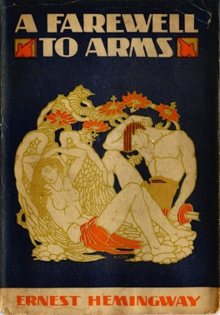
- A Farewell to Arms : A Farewell to Arms is a novel by Ernest Hemingway set during the Italian campaign of World War I. The book, published in 1929, is a first-person account of American Frederic Henry, serving as a Lieutenant ("Tenente") in the ambulance corps of the Italian Army. The title is taken from a poem by 16th-century English dramatist George Peele. A Farewell to Arms is about a love affair between the expatriate American Henry and Catherine Barkley against the backdrop of the First World War, cynical soldiers, fighting and the displacement of populations. The publication of A Farewell to Arms cemented Hemingway's stature as a modern American writer,[1] became his first best-seller, and is described by biographer Michael Reynolds as "the premier American war novel from that debacle World War I."
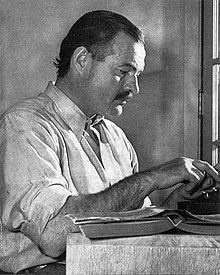
- Hemingway : Ernest Miller Hemingway (July 21, 1899 – July 2, 1961) was an American novelist, short story writer, and journalist. His economical and understated style had a strong influence on 20th-century fiction, while his life of adventure and his public image influenced later generations. Hemingway produced most of his work between the mid-1920s and the mid-1950s, and won the Nobel Prize in Literature in 1954. He published seven novels, six short story collections, and two non-fiction works. Additional works, including three novels, four short story collections, and three non-fiction works, were published posthumously. Many of his works are considered classics of American literature.
- merry-go-round

--------------------------------------------------------------------------------------------------------------------------
- er ,or , ist , ian ,ant - suffix for people
vocabulary
unit 21
- decorum : polite behavior that is appropriate in a social situation→synonym propriety
- espouse : espouse something (formal) to give your support to a belief, policy, etc.
- exhilaration : a feeling of being very happy and excited
- exorbitant : (of a price) much too high
- extricate :
- (1) extricate somebody/something/yourself (from something) to escape or enable somebody to escape from a difficult situation
- (2)extricate somebody/something/yourself (from something) to free somebody/something or yourself from a place where they/it or you are trapped
- facilitate : facilitate something (formal) to make an action or a process possible or easier
- orthodox :
- (1)(especially of beliefs or behavior) generally accepted or approved of; following generally accepted beliefs
- (2) following closely the traditional beliefs and practices of a religion
- rejuvenate : rejuvenate somebody/something to make somebody/something look or feel younger, more lively or more modern
- synchronize :
- to happen at the same time or to move at the same speed as something; to make something do this
- to link data files between one computer or mobile device and another so that the information in the files on both machines is the same
- tenuous :
- so weak or uncertain that it hardly exists
- extremely thin and easily broken
unit 22
- assimilate :
- assimilate something to fully understand an idea or some information so that you are able to use it yourself
- to become, or allow somebody to become, a part of a country or community rather than remaining in a separate group
- to make an idea, a person’s attitude, etc. fit into something or be acceptable
- belligerent : unfriendly and aggressive
- demeanor : the way that somebody looks or behaves
- denunciation : an act of criticizing somebody/something strongly in public
- dissipate : to gradually become or make something become weaker until it disappears
- indolent : not wanting to work →synonym lazy
- inherent : that is a basic or permanent part of somebody/something and that cannot be removed →synonym intrinsic
- nonchalant : behaving in a calm and relaxed way; giving the impression that you are not feeling any anxiety →synonym casual
- unassuming : not wanting to draw attention to yourself or to your abilities or status →synonym modest
- unilateral : done by one member of a group or an organization without the agreement of the other members

沒有留言:
張貼留言