week fourteen
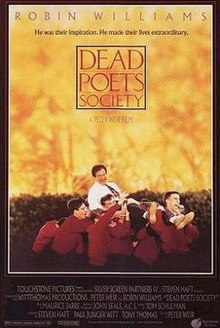
Dead Poets Society - Dead Poets Society is a 1989 American drama film written by Tom Schulman, directed by Peter Weir and starring Robin Williams. Set at the conservative and aristocratic Welton Academy in the Northeastern United States in 1959, it tells the story of an English teacher who inspires his students through his teaching of poetry.
"O Captain! My Captain!" is an extended metaphor poem written in 1865 by Walt Whitman, about the death of American president Abraham Lincoln. The poem was first published in the pamphlet Sequel to Drum-Taps which assembled 18 poems regarding the American Civil War, including another Lincoln elegy, "When Lilacs Last in the Dooryard Bloom'd". It was included in Whitman's comprehensive collection Leaves of Grass beginning with its fourth edition published in 1867.
When Lilacs Last in the Dooryard Bloom'd
O Captain! My Captain! our fearful trip is done;
The ship has weather'd every rack, the prize we sought is won;
The port is near, the bells I hear, the people all exulting,
While follow eyes the steady keel, the vessel grim and daring:
But O heart! heart! heart!
O the bleeding drops of red,
Where on the deck my Captain lies,
Fallen cold and dead.
O Captain! My Captain! rise up and hear the bells;
Rise up—for you the flag is flung—for you the bugle trills;
For you bouquets and ribbon'd wreaths—for you the shores a-crowding;
For you they call, the swaying mass, their eager faces turning;
Here captain! dear father!
This arm beneath your head;
It is some dream that on the deck,
You've fallen cold and dead.
My Captain does not answer, his lips are pale and still;
My father does not feel my arm, he has no pulse nor will;
The ship is anchor'd safe and sound, its voyage closed and done;
From fearful trip, the victor ship, comes in with object won;
Exult, O shores, and ring, O bells!
But I, with mournful tread,
Walk the deck my captain lies,
Fallen cold and dead.
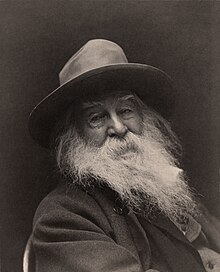
Walt Whitman - Walter "Walt" Whitman was an American poet, essayist and journalist. A humanist, he was a part of the transition between transcendentalism and realism, incorporating both views in his works. Whitman is among the most influential poets in the American canon, often called the father of free verse. His work was very controversial in its time, particularly his poetry collection Leaves of Grass, which was described as obscene for its overt sexuality.
extended metaphor - An extended metaphor, also known as a conceit or sustained metaphor, is when an author exploits a single metaphor or analogy at length through multiple linked vehicles, tenors, and grounds throughout a poem or story.Tenor is the subject of the metaphor, vehicle is the image or subject that carries the weight of the comparison, and ground is the shared proprieties of the two compared subjects. Another way to think of extended metaphors is in terms of implications of a base metaphor. These implications are repeatedly emphasized, discovered, rediscovered, and progressed in new ways.
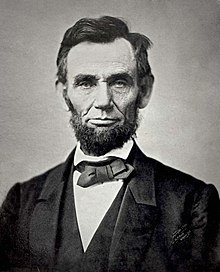
Abraham Lincoln - Abraham Lincoln was the 16th President of the United States, serving from March 1861 until his assassination in April 1865. Lincoln led the United States through its Civil War—its bloodiest war and its greatest moral, constitutional, and political crisis. In doing so, he preserved the Union, abolished slavery, strengthened the federal government, and modernized the economy.
James Madison
Knowledge will forever govern ignorance; and a people who mean to be their own governors must arm themselves with the power which knowledge gives.

petite - In fashion and clothing, a petite size is a standard clothing size designed to fit women of shorter height, typically 162 cm (5 ft 4 in) or less.
skyscraper

NATO phonetic alphabet - The International Radiotelephony Spelling Alphabet, commonly known as the NATO phonetic alphabet and also known as the ICAO radiotelephonic, phonetic or spelling alphabet and the ITU radiotelephonic or phonetic alphabet, is the most widely used radiotelephonic spelling alphabet. Although often called "phonetic alphabets", spelling alphabets are not associated with phonetic transcription systems such as the International Phonetic Alphabet. Instead, the International Civil Aviation Organization (ICAO) alphabet assigned code words acrophonically to the letters of the English alphabet so that critical combinations of letters and numbers can be pronounced and understood by those who transmit and receive voice messages by radio or telephone regardless of language barriers or the presence of transmission static.

--------------------------------------------------------------------------------------------------------------------------
陳奕迅 想哭 - https://www.youtube.com/watch?v=VWNDE18W7bM

--------------------------------------------------------------------------------------------------------------------------
"O Captain! My Captain!" is an extended metaphor poem written in 1865 by Walt Whitman, about the death of American president Abraham Lincoln. The poem was first published in the pamphlet Sequel to Drum-Taps which assembled 18 poems regarding the American Civil War, including another Lincoln elegy, "When Lilacs Last in the Dooryard Bloom'd". It was included in Whitman's comprehensive collection Leaves of Grass beginning with its fourth edition published in 1867.
When Lilacs Last in the Dooryard Bloom'd
O Captain! My Captain! our fearful trip is done;
The ship has weather'd every rack, the prize we sought is won;
The port is near, the bells I hear, the people all exulting,
While follow eyes the steady keel, the vessel grim and daring:
But O heart! heart! heart!
O the bleeding drops of red,
Where on the deck my Captain lies,
Fallen cold and dead.
O Captain! My Captain! rise up and hear the bells;
Rise up—for you the flag is flung—for you the bugle trills;
For you bouquets and ribbon'd wreaths—for you the shores a-crowding;
For you they call, the swaying mass, their eager faces turning;
Here captain! dear father!
This arm beneath your head;
It is some dream that on the deck,
You've fallen cold and dead.
My Captain does not answer, his lips are pale and still;
My father does not feel my arm, he has no pulse nor will;
The ship is anchor'd safe and sound, its voyage closed and done;
From fearful trip, the victor ship, comes in with object won;
Exult, O shores, and ring, O bells!
But I, with mournful tread,
Walk the deck my captain lies,
Fallen cold and dead.
Walt Whitman - Walter "Walt" Whitman was an American poet, essayist and journalist. A humanist, he was a part of the transition between transcendentalism and realism, incorporating both views in his works. Whitman is among the most influential poets in the American canon, often called the father of free verse. His work was very controversial in its time, particularly his poetry collection Leaves of Grass, which was described as obscene for its overt sexuality.
extended metaphor - An extended metaphor, also known as a conceit or sustained metaphor, is when an author exploits a single metaphor or analogy at length through multiple linked vehicles, tenors, and grounds throughout a poem or story.Tenor is the subject of the metaphor, vehicle is the image or subject that carries the weight of the comparison, and ground is the shared proprieties of the two compared subjects. Another way to think of extended metaphors is in terms of implications of a base metaphor. These implications are repeatedly emphasized, discovered, rediscovered, and progressed in new ways.
Abraham Lincoln - Abraham Lincoln was the 16th President of the United States, serving from March 1861 until his assassination in April 1865. Lincoln led the United States through its Civil War—its bloodiest war and its greatest moral, constitutional, and political crisis. In doing so, he preserved the Union, abolished slavery, strengthened the federal government, and modernized the economy.
James Madison
Knowledge will forever govern ignorance; and a people who mean to be their own governors must arm themselves with the power which knowledge gives.
petite - In fashion and clothing, a petite size is a standard clothing size designed to fit women of shorter height, typically 162 cm (5 ft 4 in) or less.
skyscraper
NATO phonetic alphabet - The International Radiotelephony Spelling Alphabet, commonly known as the NATO phonetic alphabet and also known as the ICAO radiotelephonic, phonetic or spelling alphabet and the ITU radiotelephonic or phonetic alphabet, is the most widely used radiotelephonic spelling alphabet. Although often called "phonetic alphabets", spelling alphabets are not associated with phonetic transcription systems such as the International Phonetic Alphabet. Instead, the International Civil Aviation Organization (ICAO) alphabet assigned code words acrophonically to the letters of the English alphabet so that critical combinations of letters and numbers can be pronounced and understood by those who transmit and receive voice messages by radio or telephone regardless of language barriers or the presence of transmission static.
--------------------------------------------------------------------------------------------------------------------------
陳奕迅 想哭 - https://www.youtube.com/watch?v=VWNDE18W7bM
--------------------------------------------------------------------------------------------------------------------------
vocabulary
unit 23
- analogy -
- [countable] a comparison of one thing with another thing that has similar features; a feature that is similaranalogy (between A and B) The teacher drew an analogy between the human heart and a pump.analogy (with something) There are no analogies with any previous legal cases.
- [uncountable] the process of comparing one thing with another thing that has similar features in order to explain it
- annihilate -
- annihilate somebody/something/yourself to destroy somebody/something completelyThe human race has enough weapons to annihilate itself.
- annihilate somebody/something to defeat somebody/something completelyShe annihilated her opponent, who failed to win a single game.
- criterion - a standard or principle by which something is judged, or with the help of which a decision is made
- emanate - emanate something (formal) to produce or show something
- holistic -
- (informal) considering a whole thing or being to be more than a collection of partsa holistic approach to life
- (medical) treating the whole person rather than just the symptoms (= effects) of a diseaseholistic medicine
- placebo - a substance that has no physical effects, given to patients who do not need medicine but think that they do, or used when testing new drugs
- proficient - able to do something well because of training and practice
- staunch - (stauncher, staunchest) strong and loyal in your opinions and attitudesynonym faithful
- subversive - a person who tries to destroy or damage a government or political system by attacking it secretly or indirectly
- vindicate -
- vindicate something to prove that something is true or that you were right to do something, especially when other people had a different opinionsynonym justifyI have every confidence that this decision will be fully vindicated.
- vindicate somebody to prove that somebody is not guilty when they have been accused of doing something wrong or illegalNew evidence emerged, vindicating him completely.
unit 24
- -cian,-ian
- (in nouns and adjectives) from; typical ofBostonianBrazilianShakespearian
- (in nouns) a specialist inmathematician
- dec - (in nouns) ten; having ten
- duc,duct to lead;guide;draw off
- -en
- (in verbs) to make or becomeblackensadden
- (in adjectives) made of; looking likewoodengolden
- homo- (in nouns, adjectives and adverbs) the same
- oct-,octo- (in nouns, adjectives and adverbs) eight; having eight
- -ous (in adjectives) having the nature or quality of
- phil,-phile (in nouns, adjectives, verbs and adverbs) liking
- sur- over;above;additional
- vol to will;choose

沒有留言:
張貼留言